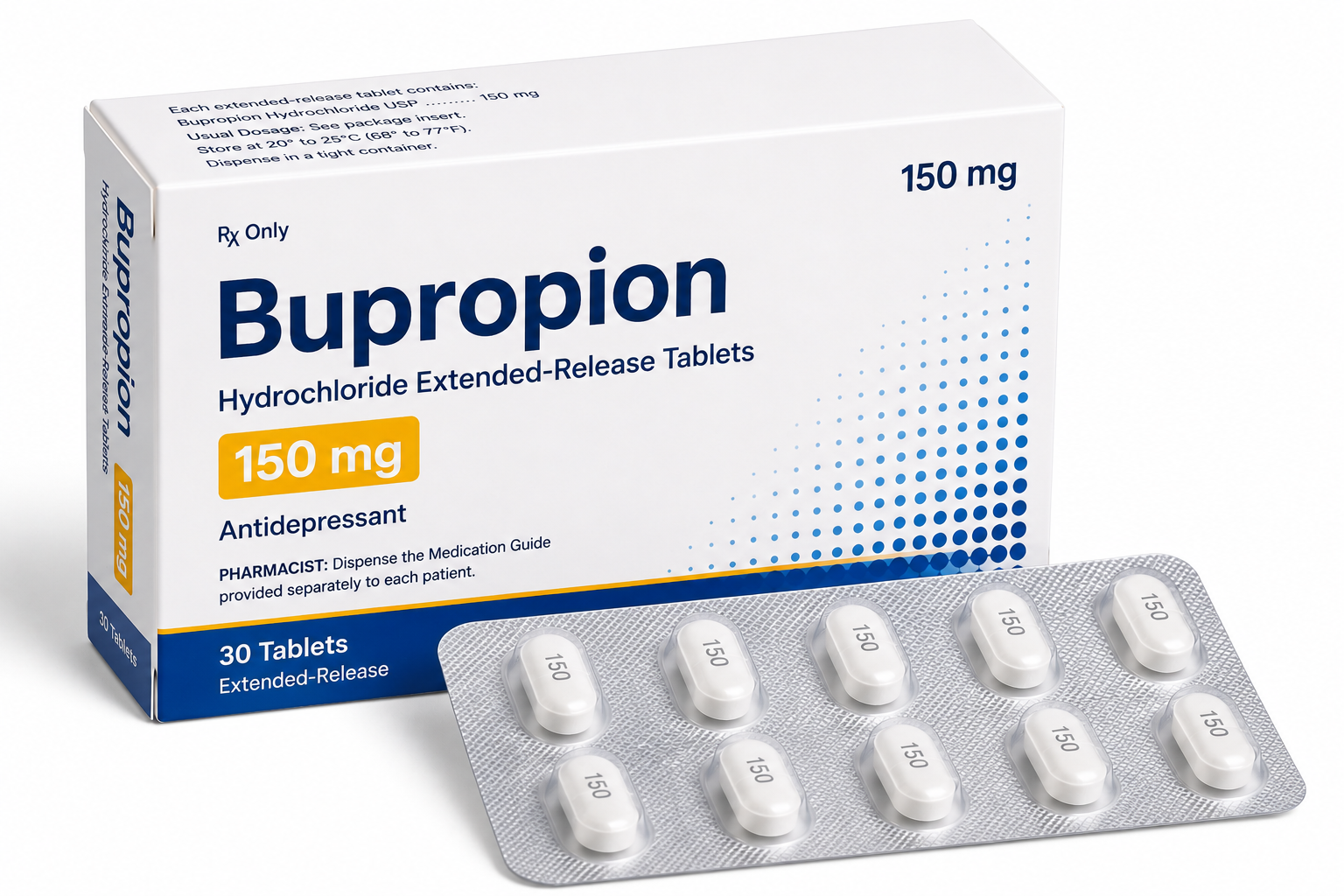
Bupropion Overview
Bupropion is a well‑established antidepressant belonging to the class of norepinephrine–dopamine reuptake inhibitors (NDRIs). Unlike SSRIs and SNRIs, it does not significantly affect serotonin pathways, which contributes to its distinct clinical profile. Bupropion is available in immediate‑release, sustained‑release (SR), and extended‑release (XL) formulations, allowing flexible dosing strategies and improved tolerability.
The medication is widely used due to its activating properties, potential to improve cognitive function, and minimal impact on weight or sexual function. These characteristics make bupropion a frequent choice for individuals who have not responded well to serotonergic antidepressants or who experienced undesirable side effects with other treatments.
Medical Uses
Bupropion is approved for major depressive disorder and seasonal affective disorder, and it is also used as a pharmacological aid for smoking cessation. Its mechanism of action provides benefits for individuals experiencing low motivation, reduced energy, or cognitive slowing. Beyond approved uses, bupropion is frequently studied in off‑label contexts such as attention difficulties, anxiety‑related symptoms, weight management, and sexual dysfunction associated with serotonergic antidepressants.
Research indicates that bupropion may support improved concentration, reduced fatigue, and enhanced overall functioning. In smoking cessation, it helps reduce nicotine cravings and withdrawal symptoms, making it one of the most evidence‑supported non‑nicotine pharmacotherapies.
Dosage & Administration
Bupropion dosing varies depending on the formulation and therapeutic goal. Extended‑release (XL) and sustained‑release (SR) versions are commonly used to maintain stable plasma levels throughout the day. Healthcare professionals typically consider factors such as tolerability, treatment history, and clinical response when determining an appropriate dosing schedule.
Bupropion is generally taken at the same time each day, and evening dosing is often avoided due to its stimulating properties. Exceeding recommended daily limits may increase the risk of adverse effects, including seizure risk, which is dose‑dependent. If a dose is missed, doubling the next dose is not advised.
How Bupropion Works
Bupropion functions primarily as a norepinephrine–dopamine reuptake inhibitor (NDRI), increasing the availability of these neurotransmitters in key brain regions associated with mood regulation, motivation, and reward processing. Unlike SSRIs and SNRIs, it does not significantly influence serotonin pathways, which contributes to its distinct therapeutic profile and reduced likelihood of serotonin‑related side effects.
The medication’s dopaminergic activity is believed to support improvements in energy, cognitive performance, and overall engagement in daily activities. Its noradrenergic effects may contribute to enhanced alertness and reduced fatigue. This dual mechanism underpins its use in depressive disorders and smoking cessation, where motivation and reward pathways play a central role.
Onset & Duration
The onset of bupropion’s therapeutic effects varies depending on the condition being treated. Individuals may notice improvements in energy, concentration, or motivation earlier than mood‑related changes. Full antidepressant effects typically develop over several weeks as neurochemical adaptations occur. In smoking cessation, reductions in cravings and withdrawal symptoms often emerge within the first week of treatment.
Extended‑release formulations provide stable plasma concentrations throughout the day, supporting consistent symptom control. The duration of action depends on the specific formulation, with XL versions designed for once‑daily dosing and SR versions commonly taken twice daily.
Side Effects
Bupropion is generally well tolerated, and its side‑effect profile differs from that of serotonergic antidepressants. Commonly reported effects include dry mouth, insomnia, increased alertness, and mild gastrointestinal discomfort. These reactions are often transient and may diminish as the body adjusts to treatment.
Less frequent effects may include restlessness, headache, or changes in appetite. Bupropion is associated with a dose‑dependent risk of seizures, which is one of the most clinically relevant considerations when determining appropriate dosing. Healthcare professionals typically evaluate individual risk factors before initiating therapy.
Contraindications
Bupropion is not suitable for individuals with certain medical conditions or risk factors. Contraindications include a history of seizure disorders, current or past eating disorders such as bulimia or anorexia, and recent abrupt discontinuation of alcohol or sedative medications. These conditions may increase susceptibility to adverse neurological effects.
Additional contraindications include the use of monoamine oxidase inhibitors (MAOIs) within the preceding 14 days, as well as known hypersensitivity to bupropion or any component of the formulation. Healthcare professionals typically assess medical history and concurrent medications to determine whether bupropion is an appropriate option.
Drug Interactions
Bupropion interacts with several medications through metabolic pathways, particularly those involving the CYP2B6 enzyme. Substances that inhibit or induce this enzyme may alter bupropion plasma levels, potentially affecting its efficacy or tolerability. Alcohol consumption may also influence the medication’s effects and is generally approached with caution.
Interactions may occur with antidepressants, antipsychotics, nicotine replacement therapies, and medications that lower the seizure threshold. Healthcare professionals typically review concurrent treatments to minimize risks and ensure optimal therapeutic outcomes.
Warnings & Precautions
Bupropion requires careful consideration in individuals with certain medical or neurological risk factors. Because the medication has a dose‑dependent effect on seizure threshold, clinicians typically evaluate personal and family history of seizures, head trauma, or metabolic conditions that may increase susceptibility. Gradual dose adjustments and adherence to recommended limits are essential components of safe use.
Additional precautions relate to potential changes in mood, agitation, or sleep patterns, particularly during the early stages of treatment. Individuals with cardiovascular conditions may require monitoring due to possible increases in blood pressure or heart rate. Healthcare professionals generally assess overall risk–benefit profiles before initiating therapy.
Bupropion vs Other Antidepressants
Bupropion differs significantly from SSRIs, SNRIs, and tricyclic antidepressants in both mechanism and tolerability. Its lack of serotonergic activity contributes to a lower likelihood of weight gain, sedation, or sexual dysfunction—effects commonly associated with serotonergic medications. This distinction makes bupropion a frequently considered alternative for individuals who have experienced challenges with other antidepressant classes.
Compared with activating agents such as certain SNRIs, bupropion often provides a more balanced stimulation profile without substantial increases in anxiety for many individuals. Its dopaminergic and noradrenergic effects may support improvements in motivation, cognitive performance, and overall functional capacity, which can be particularly relevant in depressive presentations characterized by low energy or reduced engagement.
Bupropion for Smoking Cessation
Bupropion is widely recognized as an effective pharmacological aid for smoking cessation. Its influence on dopaminergic reward pathways helps reduce cravings, while its noradrenergic effects may lessen irritability and withdrawal‑related fatigue. These combined actions support individuals during the transition away from nicotine dependence.
Treatment protocols often involve initiating bupropion prior to the planned quit date, allowing therapeutic levels to stabilize. Evidence suggests that the medication can improve quit rates when used alone or in combination with behavioral support strategies. Its non‑nicotine mechanism makes it a valuable option for individuals seeking alternatives to nicotine replacement therapies.
Weight Impact
Bupropion is notable for its generally neutral or modestly weight‑reducing profile, which contrasts with the weight gain sometimes associated with serotonergic antidepressants. Its noradrenergic and dopaminergic activity may contribute to improved energy expenditure and reduced appetite in some individuals, although responses vary.
Because weight changes can influence treatment satisfaction and adherence, bupropion is often considered in cases where minimizing weight‑related effects is a priority. Research continues to explore its potential role in broader metabolic and weight‑management contexts.
Sexual Side Effects
Bupropion is associated with a lower incidence of sexual side effects compared with SSRIs and SNRIs. Its mechanism of action does not significantly interfere with serotonin pathways, which are commonly implicated in reduced libido, delayed orgasm, or other sexual function concerns.
Because of this favorable profile, bupropion is sometimes considered in individuals who have experienced sexual dysfunction with other antidepressants. Its use in this context is supported by clinical observations and ongoing research into its dopaminergic effects.
Withdrawal & Discontinuation
Bupropion is generally associated with a lower likelihood of withdrawal‑related symptoms compared with serotonergic antidepressants. Its pharmacological profile and longer half‑life contribute to a more gradual decline in plasma levels following dose reduction. Nonetheless, changes in dosing are typically approached gradually to support comfort and stability.
Individuals discontinuing bupropion may experience mild changes in energy, sleep, or mood as the body adjusts. Healthcare professionals often recommend structured tapering schedules tailored to individual needs, ensuring a smooth transition and minimizing potential discomfort.
Quick Facts
- Class: NDRI antidepressant
- Forms: IR, SR, XL
- Primary Uses: Depression, SAD, smoking cessation
- Half‑life: ~21 hours
- Metabolism: CYP2B6 pathway
- Notable Feature: Low sexual side‑effect risk
Bupropion SR vs XL
| SR | Typically taken twice daily |
| XL | Once‑daily extended release |
| Profile | Both provide stable plasma levels |
Bupropion vs SSRIs
- Lower risk of sexual dysfunction
- Less likely to cause weight gain
- More activating profile
- Different mechanism (NDRI vs serotonin‑based)
Product Image